Listen
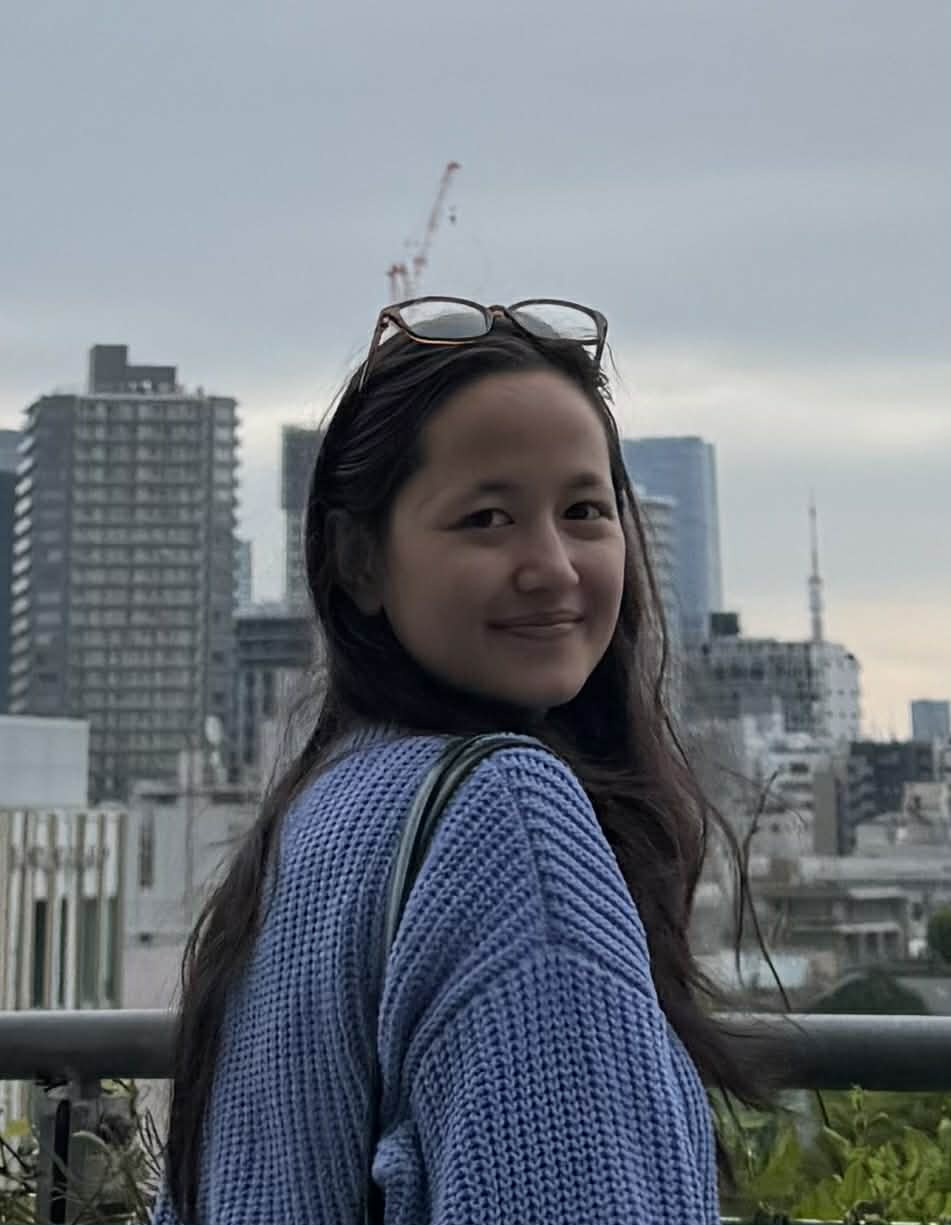
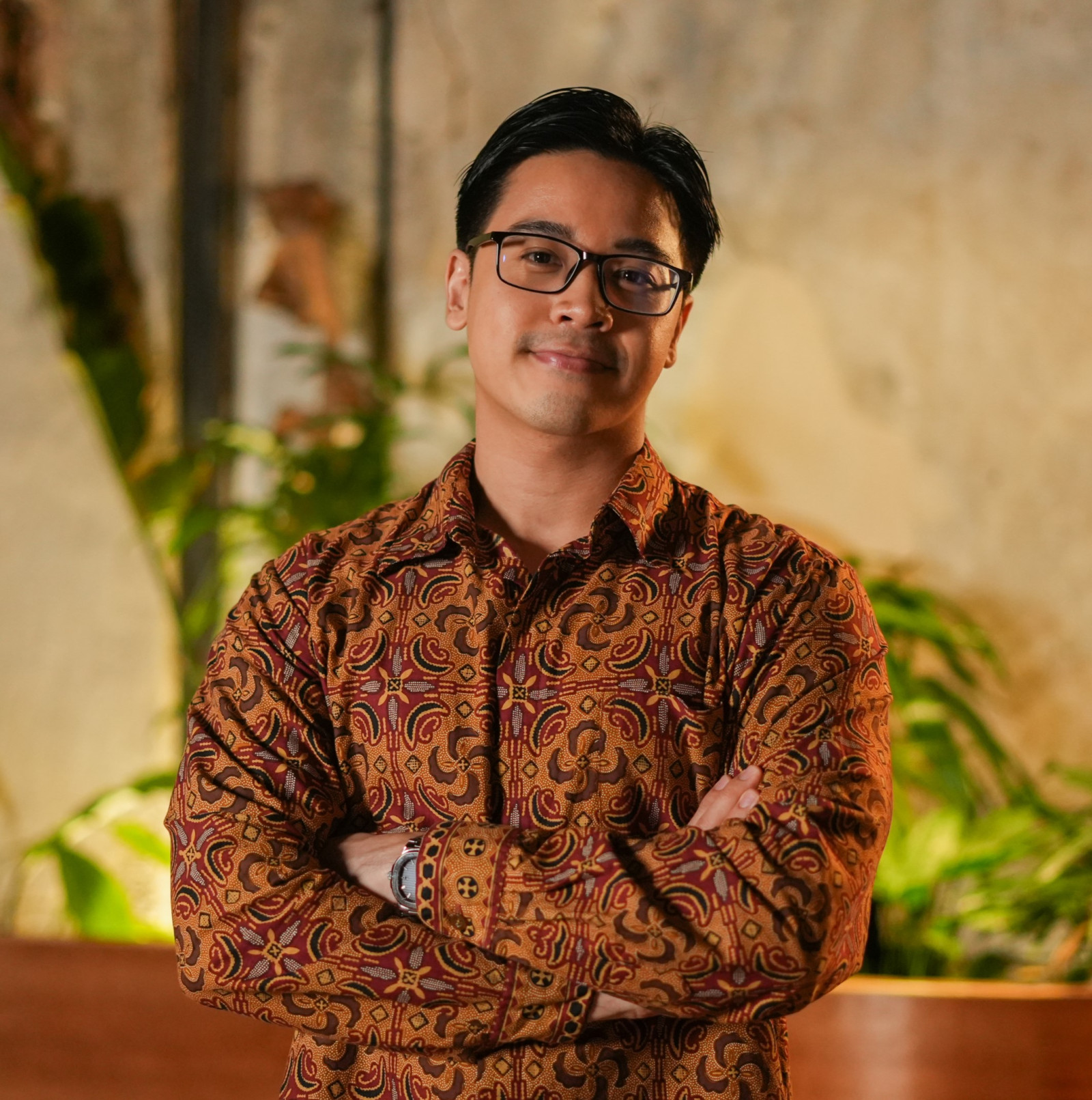
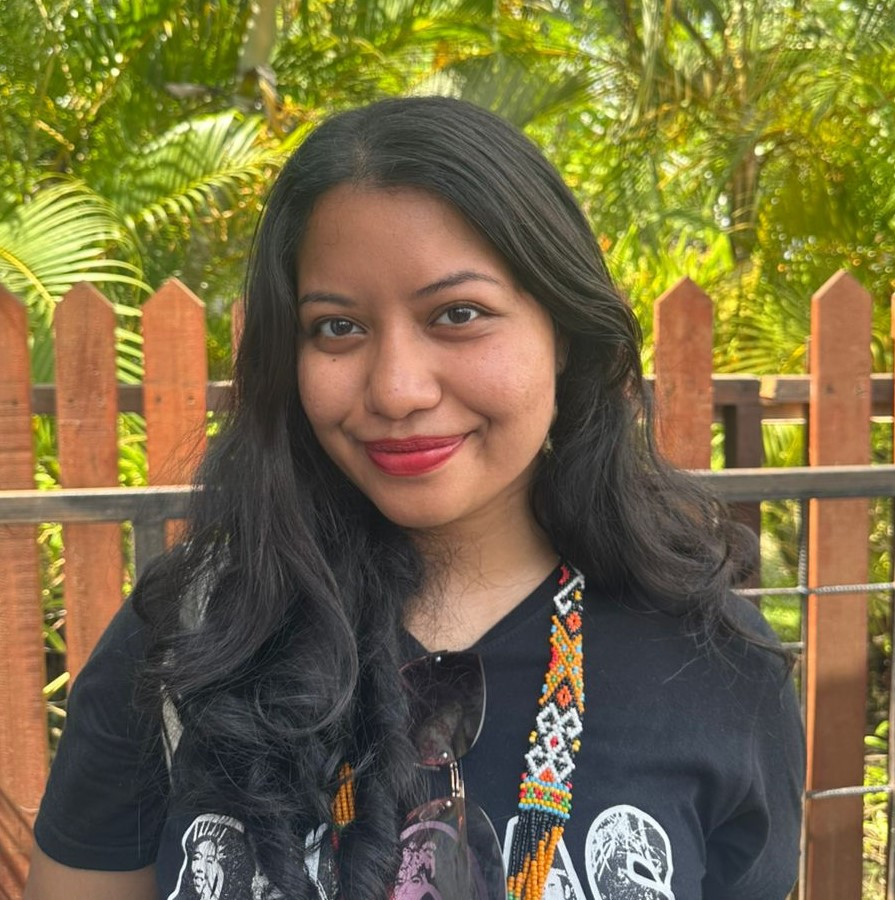
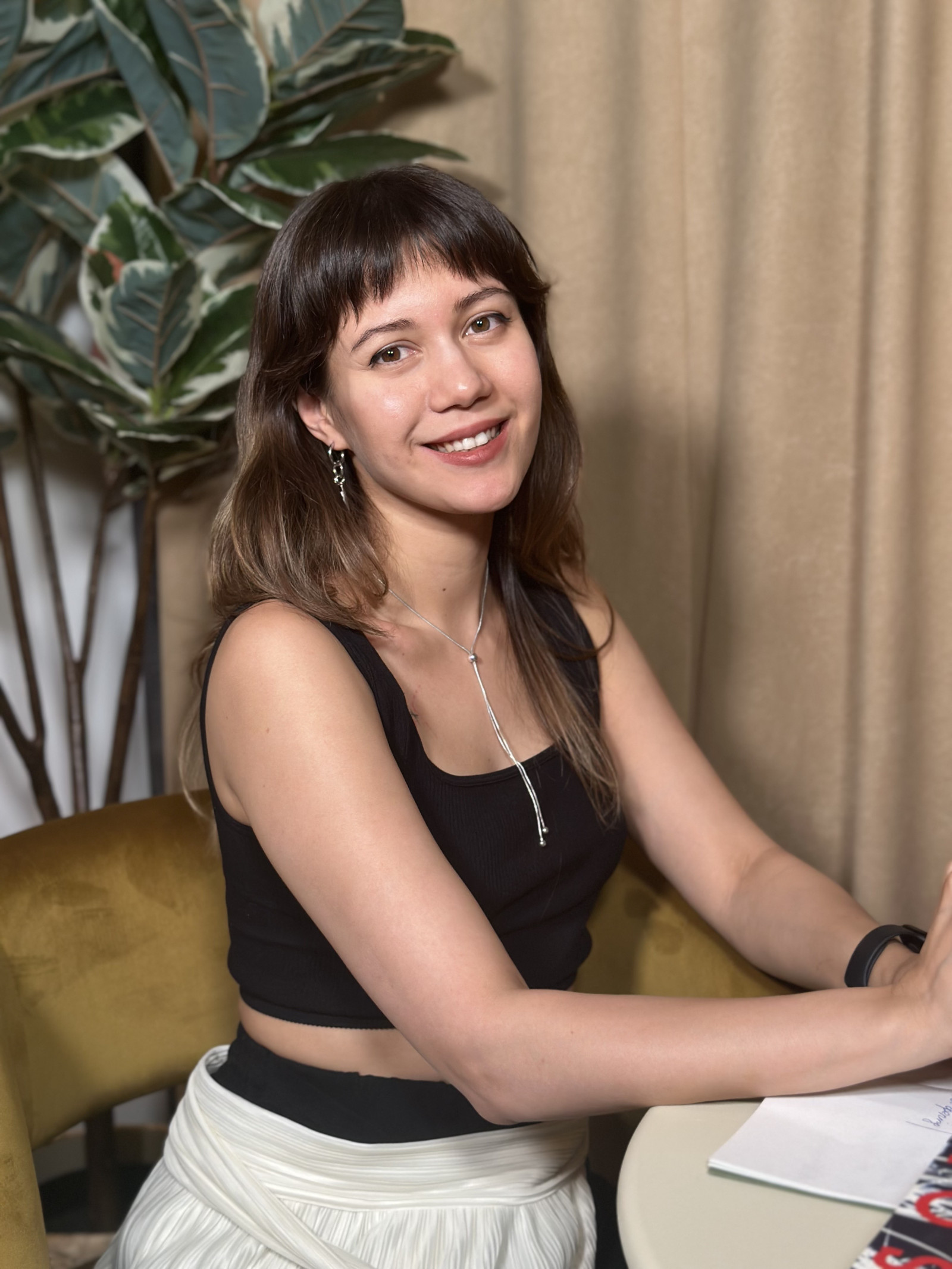
Gulnaz Ratu, podcast producer and journalist, shares her perspective on what she experienced and overheard at Frankfurter Buchmesse 2025 in her audio documentary, with contributions by Project Manager of Tomorrow Club Ege Dündar, as well as Zoya Miari and Arizza Nocum.
Not Enough
In Russian, to the question "Are you Russian?" I answer "no," and it is the plain truth. In English, to the same question, I answer "yes," and that is also true. Between the two truths lies one word English doesn't have: "rossiyanka" [male: rossiyanin] — a citizen of Russia, not necessarily "russkaya," [male: russkiy] — ethnically Russian. The word is old, but it was the state that kept putting it to use: so that someone like me could belong without being russkaya. We learned it by heart, in verse, for 9 May, Victory Day. Then the same state pushed a pop hit, "Ya russkiy" ("I Am Russian"(2), into the stadiums, and the word was no longer needed.
I was born in 1993 in Bashkortostan — two years after the collapse of the USSR and twenty-nine years before the start of the full-scale invasion of Ukraine and my emigration from Russia. I now live in Berlin.
The Bashkirs are an indigenous people of the Southern Urals, mostly Muslim. They lived on this land long before 1557, when they became — "voluntarily", by the official formula — part of the Muscovite state, and then for a century and a half rose up against it roughly once a generation. Today this land is the Republic of Bashkortostan, one of Russia's ethnic republics, with its own language, its own constitution, and, until 2015, its own president — though Bashkirs are only 31 percent of its population.(3)
At school, for 9 May, the country's main holiday, we memorized a poem by Mustai Karim, People's Poet of Bashkortostan. Streets, schools, and the airport in Ufa, the capital, are named after him. These lines were firmly indoctrinated into my head:
Rus tügelmen, läkin rossiyan min.
I am not russkiy, but I am rossiyanin… One fate was given to us and to the Russians.(4)
We were raised on the idea that world peace was the highest value; that my grandfathers had defended the motherland shoulder to shoulder with my classmates' Russian grandfathers. That "rossiyan min" seemed fully earned. Much later than I learned those lines by heart, I found out that the poet was a Party member, a Hero of Socialist Labor, a Lenin Prize laureate and one of the voices in which the state spoke of the "friendship of peoples." I took it as a betrayal—with all the seriousness of a girl who crammed those lines for the school Victory Day pageant. Another betrayal: in big-city Russia, Bashkirs, Tatars and other non-Russians are called "churki"—"churka,"(5) a stump of wood, a thing that neither thinks nor feels.
The first time I heard that I was "not enough" was over the phone. Saint-Petersburg, my first year at the journalism school I had dreamed of, looking for my first apartment. The landlady, hearing my name, asked sharply, "Are you russkaya?" And at my flustered "no," she shouted at me and hung up. After that, friends with Slavic names looked for apartments for me — they got answers. Then came questions about Bashkortostan's currency and compliments on my Russian.
That same first year I was getting a job as a sales assistant in a mall and went for the medical check-up that many jobs in Russia require. The clinic was full of migrant workers from Central Asia. The doctor looked me over and, without examining me, stamped the form: "I can see you're normal." I don't remember her exact words after that, but the meaning was clear: normal—for a non-Russian.
Outwardly, I pass; it shows in my face, but not at first glance, and I never got what those who don't pass get. What I got was the puzzled pause after my name when I'm introduced — I have it down to the micro-expressions. There was a lot of this. This may sound like complaining, but I know that the majority of minorities simply swallow moments like these and worse. I blamed much of it on ignorance. What hurt was something else.
A childhood friend came to me upset: her boyfriend's father had found out that her grandfather was Bashkir, and he hadn't taken it well at all. I was just about to back her up, outraged — but her outrage was about something else: "But I'm russkaya; how can he think that!" I don't remember her arguments after that. I remember standing at the edge of something very wide, and that there was no one on the other edge.
Claiming Bashkir culture is hard when you don't live in the republic, the language is withering, and in the city where you want to be "one of them," that part of yourself is best not flaunted. But I didn't feel any particular right to take pride in Russian culture either. The classics are not to blame. But in the great Russian literature I was told to consider my own, my people appear on the margins: in Aksakov and Tolstoy, good-natured Bashkirs let their land go for next to nothing; in Pushkin, a captured Bashkir opens his mouth to answer and has no tongue — it was torn out after an uprising.(6) My whole inheritance from the Russian classics is a couple of pages and a torn-out tongue.
Until I was four, I spoke only Bashkir. Russian came with kindergarten and gradually pushed out my native language. Bashkir became the good china, brought out only at big family gatherings. Though as a child, at home, we spoke three languages at once — Bashkir, Tatar, and Russian. When classmates came over, I was ashamed of it. Now I'm ashamed that I was ashamed then.
My mother's name is Minizar. To me it always sounded like a name out of an old fairy tale. But all through my childhood her colleagues and friends called her "the Russian way," Marina. It confused me: it meant your real name was the one you had to hide. Over the years my mother came to love her strong, ringing name — a pity her mother didn't live to see it.
As a child I hated my own name as well. Gulnaz, "tender flower": a name familiar from Turkey and Iran to Georgia and Pakistan, and almost impossible in russkaya Russia. A girl from our courtyard said it was not a human name but a dog's, and I asked my sister to call me something else on the playground. My mother said: you have a very beautiful name, don't let them simplify it and call you "the Russian way". I held out. Though I dreamed of seeing at least one Gulnaz on the big screen — and never saw a single one. I hope some little Gulnaz from Russia reads this and learns that she is not alone.
What happened to me on its own — the kindergarten that pushed out my Bashkir, the shame in front of classmates, the good china in the cabinet — the state now does by order. Since September 2025, the Ministry of Education has ordered first-graders' native-language lessons cut: one hour a week instead of two in the first term; the freed-up hour went to physical education. It is not about the hours. Bashkir is left to people who live far from the cities and therefore from money; the teachers who come to teach it are from the villages and speak Russian with an accent, and children read status before they read grammar.
The language becomes a mark of "the village", people are ashamed to speak it, so it is spoken even less. And those who try to stand up for it are punished: in July 2026, 67-year-old Irek Agishev got three days in jail for a picket with a placard reading "Bring back native-language education in Bashkir schools".(8)
In January 2024 the activist Fail Alsynov got four years for a speech at a village meeting against gold mining on Bashkir land, or, more precisely, for two Bashkir words in that speech: ҡара халыҡ, qara khalyq, "common people", which the prosecution's expert translated as "black people" (9). In effect, a man was imprisoned for a translation. The language that was taken from us by shame and the school schedule is now being taken in court as well — along with the right to understand for ourselves what we are saying.
In Baymak, a town of seventeen thousand, thousands of people came out to the courthouse for him — one of the largest street protests in Russia since the invasion began; 68 of them have already been sentenced to prison. The world read a few news items about Baymak and turned the page; the Kremlin's press secretary declared that there was nothing mass about it. I'm not telling this because Bashkortostan is treated more unjustly than anywhere else — I'm telling it because hardly anyone talks about it at all. For a long time I couldn't issue myself that right either. I watched from a distance while my friends stood there.
The poem by Mustai Karim, who you've already met, has another stanza:
With the Russian, the Bashkir: companions on the road,
drinking-mates where mead is on the table, brothers-in-arms when the war horn calls,
and in the earth — gravemates, forever.
This war is being waged by my country, the one whose passport lies in my desk drawer. Its victims are Ukrainians, and that is the first thing to say about any graves. The second is that more people from my republic have died in this war than from any other region of Russia: more than ten thousand names confirmed by Mediazona and the BBC, and that, by the estimate of experts they surveyed, is only about half the real losses. (11)
This is what the state does with people it itself calls "not enough": first it explains to them who they are, then it sends them to kill. Those lines about gravemates leave me bitter — it seems all this time they only ever worked in one direction.
When I had just left Russia, in March 2022, there was graffiti all over Tbilisi: Fuck Russia. Russians go home. It didn't enrage me: I understood the bitterness of the people who wrote it, and I shared it — the bitterness, not the message. But which home? In Bashkortostan I was too Russian; here, in emigration, not enough not Russian. Every time I say "I'm Russian" in English, I could add "but…" and explain about Bashkortostan. But putting one part of yourself forward to hide another is the same as changing Minizar to Marina, only in mirror image: the same dead end. And I don't separate myself from Russians. I grew up among them, voted, went to the same protests, did not do enough, just like all of us — and probably spread stereotypes about others myself.
I've almost never written about the Bashkir side of myself. Reading about the protests, I couldn't bring myself to speak out, and not because I didn't care: each time I had a valid reason. I am not Bashkir enough: I don't go to protests in Bashkortostan — I haven't lived there in a very long time — I speak Bashkir with a Russian accent, and anyway, I live in Berlin. I am not not-Russian enough: Russian is the first language I write in, and Saint-Petersburg is my favourite city. I have not suffered enough: around me are people who have been through incomparably more, and taking up airtime next to them seemed out of place. But if I stay silent, the right to talk about us goes to those who sing "Ya russkiy".
There is a word for what happened to my mother's name, and it is not "assimilation" but Russification. It was never announced. It was slipped in with disarming friendliness — "What's your name the Russian way?", "You're normal, though": Minizar became Marina for her colleagues' convenience; I was ashamed of three languages in the living room for my classmates' convenience. Nobody forced me. Russification can do without an order: it works through shame, and that's why it's so easy to mistake for your own choice.
There is no such thing as a pure identity, least of all in a country where it is rewritten several times a century. All of it has already soaked into me, and I'm not going to pick any of it out: the coins on my grandmother's dress and the untranslatable Bashkir sayings; rafting down the Zilim and the Belaya rivers; the tired Slavic stare I picked up and a fear of the police that has sunk under my skin; snowy winters; Navalny's death; painted eggs at Easter alongside the pagan Maslenitsa and Eid al-Fitr; my parents' bright living room with the big ficus and the white tulle curtains, which is all my homeland has shrunk to. All of it is mine, and I will not let propaganda, or the xenophobes, or Mustai Karim with his Lenin Prize decide which of it I am "entitled" to.
I will not fight Russification by denial: if I cross out the Russian in me, I will do to myself exactly what the state is doing to my Bashkir, only with my own hands. I've found a Bashkir tutor — the very lessons I disliked in school. I will claim the identities I myself consider my own, I will keep them safe, and no one will take that from me. The good china now comes out every day — let it chip; at least it won't gather dust. I'm writing this for the same reason.
And also for everyone sitting on the shards of an identity shattered by propaganda, war, emigration, displacement. These shards belong to us alone, and the kaleidoscope they form — that is ours as well. We are not "not enough." We are "more than."
Footnotes
1. Russian distinguishes россиянка (a citizen of Russia, any ethnicity) from русская (ethnically Russian); English has one word for both. Rossiyanin has been in use since the 18th century and acquired its current civic meaning in the 1990s (Yeltsin’s “dear rossiyane”). See ru.wikipedia.org/wiki/Россияне.
2.“Ya russkiy” by Shaman (Yaroslav Dronov), released 22 July 2022 — en.wikipedia.org/wiki/Ya_russkiy; Apple Music. Merited Artist of Russia by decree of 22 July 2024 — en.wikipedia.org/wiki/Shaman_(singer). Video with English lyrics (fan re-upload, not the official channel): youtu.be/OJoUumdxOhE.
3.Mustai Karim (1919–2005): People’s Poet of the Bashkir ASSR (1963), Hero of Socialist Labor (1979), Lenin Prize (1984) — Tatarica. Ufa airport named after him by presidential decree of 31 May 2019
4. Both quotations follow Mikhail Dudin’s Russian translation of the Bashkir poem «Россиянмын» (“I Am a Rossiyanin”) — Russian text, Kamenny poyas, 1982; Bashkir original. Year of composition not given in available sources.
5.Churka: literally a stump or block of wood. In Soviet prison and army slang, a name for people from Central Asia, later for anyone “non-Slavic.”
6. S. T. Aksakov, A Family Chronicle (1856; in English as A Russian Gentleman, tr. J. D. Duff): Bashkir land “bought and sold for a mere song” — Project Gutenberg.
L. N. Tolstoy, “How Much Land Does a Man Need?” (1886) — English text.
A. S. Pushkin, The Captain’s Daughter (1836), ch. VI: “one of the rebels punished in 1741” (the uprising of 1735–40), “instead of a tongue, was moving a short stump” — Project Gutenberg.
7. First-graders’ native-language hours cut to one a week from 1 September 2025 — The Moscow Times, 1 September 2025; OC Media, 4 February 2026. The legal act: Order of the Ministry of Education No. 704 of 9 October 2024
8. Irek Agishev, 67: three days’ arrest for a picket on 3 July 2026 — OVD-Info, 9 July 2026; People held placards reading: “Minister of Education of the Republic of Bashkortostan Mavletberdin I.M.—resign!,” “Let’s restore national education in Bashkir schools in the Republic of Bashkortostan,” and “In a federal state, education cannot be unified!”
9. Fail Alsynov: Baymak district court, 17 January 2024, four years in a penal colony for “inciting ethnic hatred” — The Moscow Times; Meduza. Recognized as a political prisoner — Memorial, 22 May 2024.